
Building a Strong Discrimination Complaint: Essential Documentation Tips
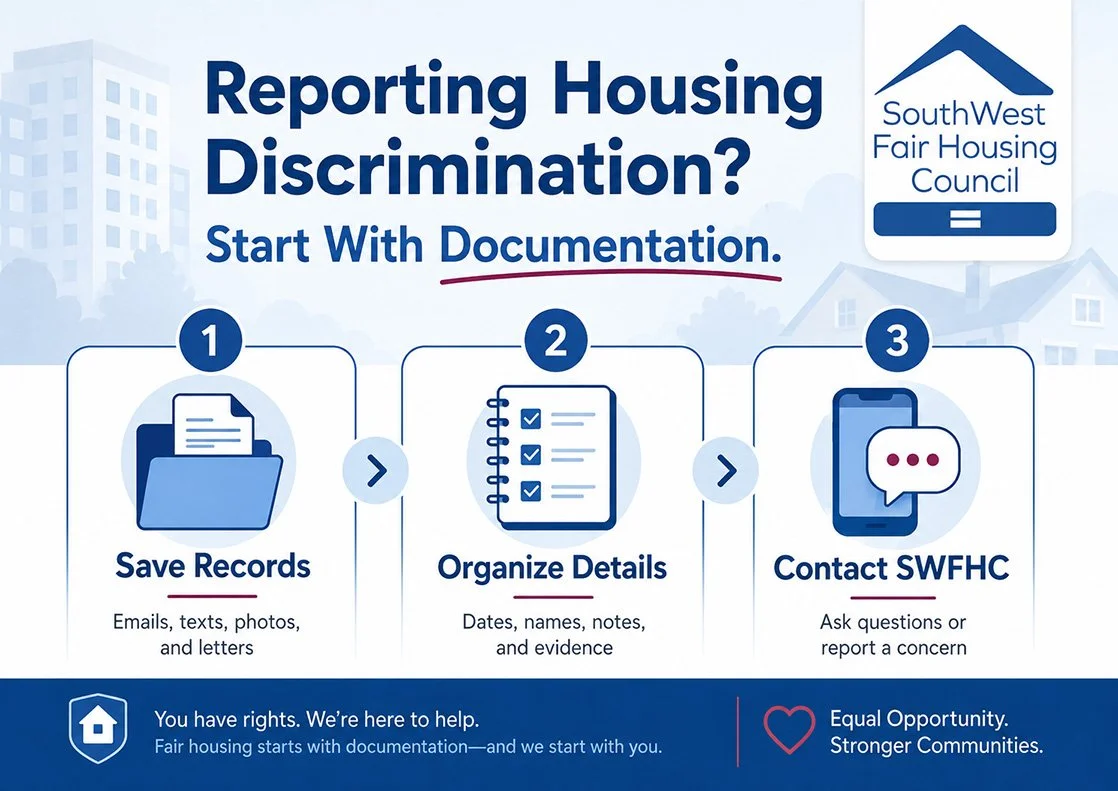
Keeping detailed records is important because it creates a clear and accurate account of what happened. This can help support your claims, especially in sensitive situations like discrimination complaints. Good documentation helps ensure the facts are correct, prevents misunderstandings, and strengthens any investigation. It also helps you provide solid evidence, making it easier for investigators to look at your case fairly. Documentation protects the rights of everyone involved, holds people accountable, and can help stop future problems by showing patterns of discrimination. Without good records, it can be hard to prove your complaint.
Here are some tips to help you collect information for your discrimination case:
Written Communication:
Save emails, texts, letters, or any other messages between you and your landlord, property manager, realtor, or housing provider. Keep anything that shows discriminatory intent or language, such as a refusal to rent or terms that favor certain groups.
Rental or Sales Documents:
Hold on to lease agreements, rental applications, or housing policies that might show unfair terms or practices. Save rental listings or ads with language that suggests discrimination, like “no children” or “English-speaking only.” Keep any denial letters or rejections from landlords, realtors, or housing authorities.
Comparative Evidence:
Gather information that shows how other tenants or applicants were treated differently. For example, if minority applicants were denied but others with similar qualifications were accepted. Collect statements from people who got different treatment in similar situations, such as someone outside a protected class who was approved for housing or given special treatment.
Witness Statements:
Ask neighbors, friends, or other tenants who saw or heard discriminatory behavior to write down what they observed. Witnesses can also describe unfair policies or practices in the housing community.
Audio/Visual Recordings:
Save phone calls, voicemails, or video recordings where discriminatory language or intent is clear. If possible, keep surveillance footage that shows discriminatory actions, like treating certain people differently.
Advertising Materials:
Keep printed or online ads for the property that include discriminatory statements or restrictions. Save any social media posts or flyers with similar language.
Property Records:
Look for public records that show who owns or manages the property. This can help show a pattern of discrimination. Keep records of any previous complaints or violations against the landlord or property manager.
Denial of Accommodation Requests (for Disability Cases):
Save records of requests for reasonable accommodations, like a service animal or accessible unit, and the responses you received. Keep medical documentation if it supports your need for accommodation.
Comparative Rent or Pricing Evidence:
Collect information about rental prices or terms offered to different tenants. This can help show if certain groups are being charged more for rent or security deposits.
Photographs or Videos:
Take photos or videos of discriminatory signs, poor property maintenance, or other evidence of unequal treatment.
Records of Retaliation:
Any evidence of retaliation after the complaint was filed (e.g., eviction notices, lease non-renewals, or threats), which are prohibited under fair housing laws.
If you think you are facing housing discrimination, please fill out this form. We will get in touch with you within 24 hours.
The Fair Housing Act protects people from unfair discrimination. If you know someone dealing with housing discrimination, please share this article.
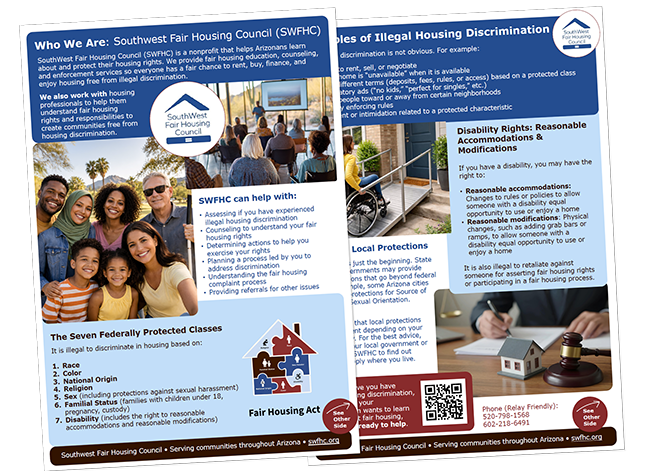
Download our Fair Housing flyer to get the most up-to-date information, and please share it with others to help them learn about their housing rights.